The Roots of Progress Institute

Progress Conference 2026

A four day event to connect people & ideas in the progress movement

Meet great people • Catalyze new projects • Share ideas • Be energized & inspired


In partnership with:

Sponsored by: 

Progress Conference 2026 Overview

October 8–11, in Berkeley, California

LOCATION: We're back for a third year at the beautiful Lighthaven Campus. 

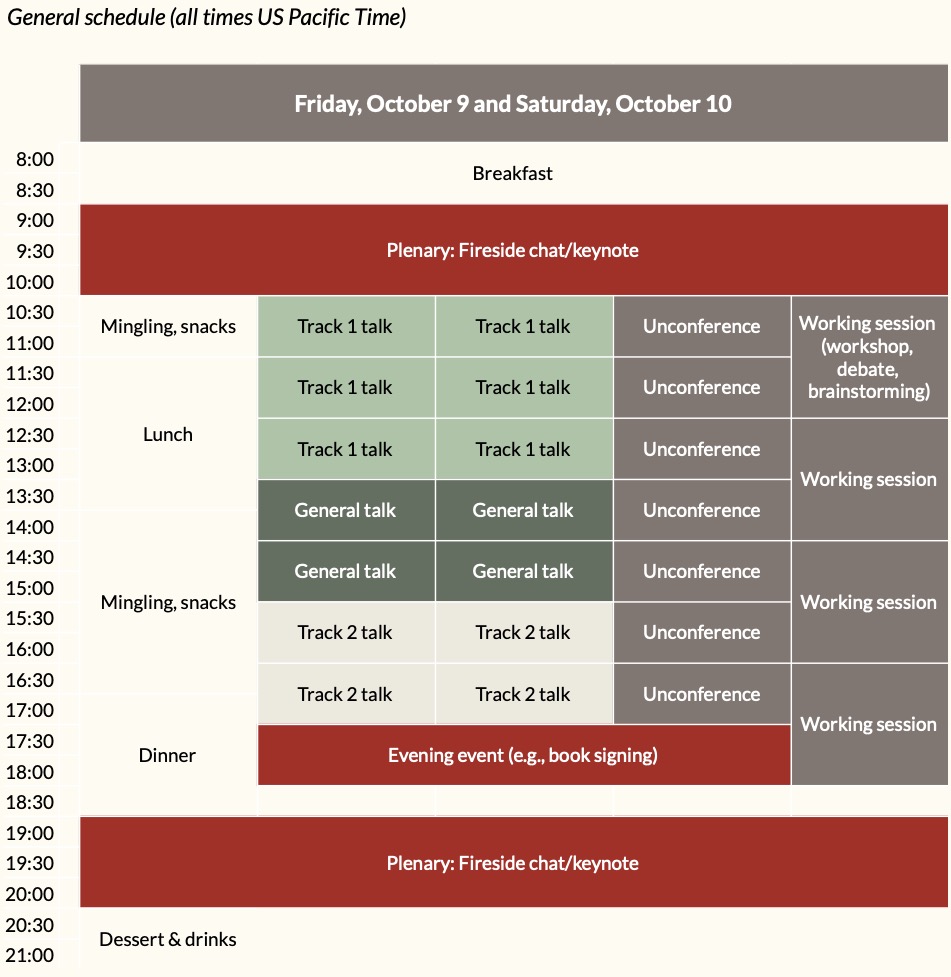
FOUR DAYS: The main two-day conference will happen all day Friday and Saturday, similar to 2025. Thursday and Sunday will be optional add-on days, with factory tours, interest group events, and other activities. 

SPEAKERS: Our initial slate of speakers is below. More speakers will be announced soon. 

ACCESS: This is again an invitation-only event, with ~400 guests. Tickets are now available for purchase by invited guests. Through May 31st, we have an open application period where anyone can apply for an invitation to attend.

Apply to attend

Sponsors: Contact us to support the progress community!

Sponsorships are available at levels from $5K–$150K. You can sponsor the keynotes, a speaker track, book signings, audio-visual support, or food/fun at the event.

Depending on the sponsorship level, sponsors received access to:

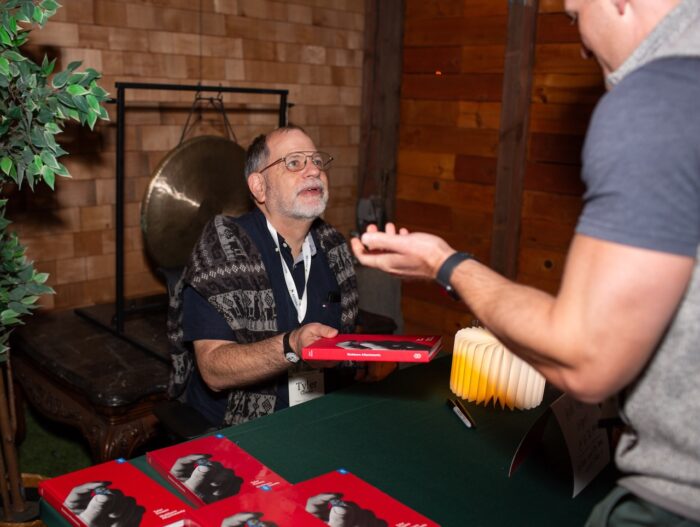
  • Branding at the event, from signs to lanyards to book plates
  • VIP reception ticket(s)
  • Conference ticket(s)
  • A room at the venue

Progress Conference 2026: Sponsorship Opportunities

Interested in sponsoring the conference? Email progress-conference@rootsofprogress.org for details or to set up a call with Ben Thomas, RPI Event Manager. 

Show details

The 2026 conference speakers

Top thinkers and doers in the progress community

Authors, founders, journalists, technologists, academics, nonprofit leaders

Our speakers all are inspired to create an ambitious, technologically advanced future—yet they may disagree (sometimes vehemently) about how we get there. They come from a wide range of backgrounds, from academics to company founders to investors, from journalists to scientists. They’ll provide thoughtful perspectives about all kinds of ways we can make progress happen—from building the bold future with AI, education, and cybersecurity, to ensuring policy enables builders in housing, urbanism, energy, media, and more.

2026 Speakers

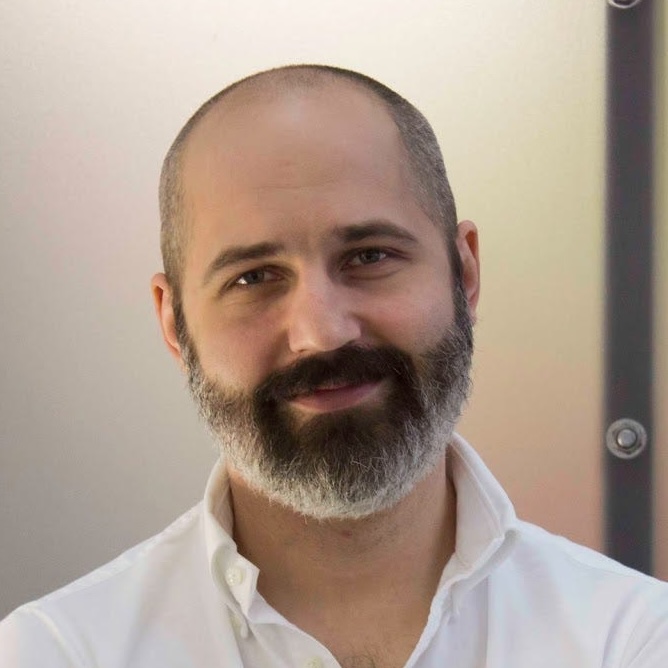
Adam Brown

Google DeepMind; Stanford University
JC

Jason Crawford

Roots of Progress Institute

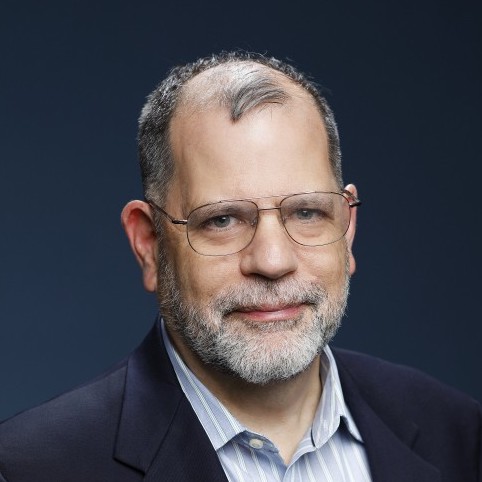
Tyler Cowen

Mercatus Center; Conversations with Tyler

Erika DeBenedictis

Pioneer Labs

Dmitri Dolgov

Waymo

Kevin Esvelt

MIT Media Lab

Alice Evans

Stanford University; Writer, The Great Gender Divergence

Bobby Fijan

American Housing Corporation

Gena Gorlin

UT Austin; Author, The Psychology of Ambition

Michael Kremer

University of Chicago; Nobel Laureate

Alexander Kustov

University of Notre Dame; RPI Fellow

Moxie Marlinspike

Confer

John Martinis

Qolab; Nobel Laureate

Andrew Miller

Changing Lanes newsletter; RPI Fellow
Brandan McCord

Brendan McCord

Cosmos Institute

Patrick McKenzie

Bits About Money; Complex Systems

Ryan Oksenhorn

Zipline

Alicia Pederson

Courtyard Urbanist

Kelsey Piper

The Argument

Brian Potter

Construction Physics; Author, The Origins of Efficiency

Santi Ruiz

Anthropic; Statecraft

Noor Siddiqui

Orchid

Micah Springut

Monumental Labs

Austin Vernon

Standard Thermal

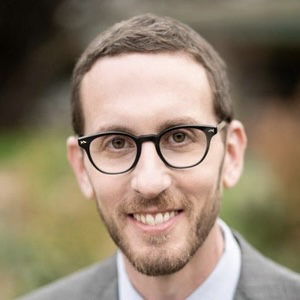
Scott Wiener

California State Senator

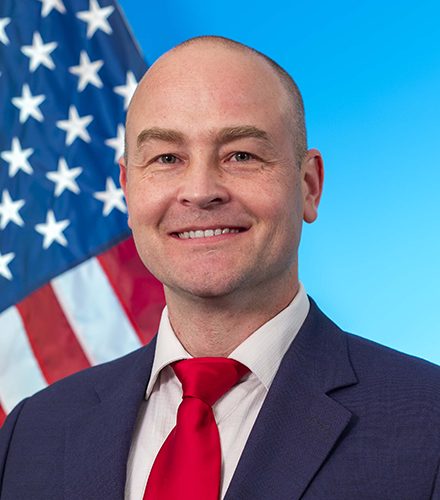
Stephen Winchell

DARPA

... and more

Additional speakers announced soon

Three tracks this year to go deep on specific topics within the progress movement: 

1. Human Talent & Potential: How to educate and inspire the next generation of builders.

Talks on the future of education, high-skilled immigration, AI and the labor market, fertility and demographics, and inspiring ambition in builders. How do we teach young people to understand the history of progress and aspire to solve new problems? How do we get the right people in the right places working towards progress? What will humans do with their time when intelligence is commoditized?

2. AI & Robotics: AI in the physical world.

Bottlenecks, breakthroughs, and economic impacts of combining AI and robotics will shape the next few decades. Talks on the impacts of autonomous vehicles and automated drone delivery, AI for math, robots making medicine, humanoid robots, and more. 

3. Security & Resilience: Towards deliberate solutions to future risks. 

Safety, security, and resilience are achieved intentionally and proactively through the accumulation and combination of incremental solutions. Talks on pandemic preparedness, biodefense and biosecurity, AI safety and resilience, cryptography and anti-surveillance, secure and robust supply chains, manufacturing and industrial capacity, and more. 

````Innovations in aerospace, defense, supply chain, industrials, manufacturing, and other deep-tech industries. Other topics may be the importance of founders and their impact on policy, how to invest in American Dynamism, and how AI will shape these industries and the jobs of the future

General talks outside of these tracks cover a wide range of topics, such as AI for mathematical research, Mars terraforming, progress in family-friendly urban design, and more. 

2025 Testimonials
There were so many talks I wanted to attend happening simultaneously that I couldn't go to everything I wanted to. Not sure how to fix this, just really great content.

Packy McCormick
Writer & Investor, Not Boring

The most valuable part is the sheer surface area. I feel like I was reading Leonardo da Vinci's notebooks. Sessions bounced from longevity biotech to nuclear fusion to maritime transportation to why America hasn't built its own Shenzhen yet. The diversity and frontier-ness is amazing!
Afra Wang
RPI Fellow; Writer, Concurrent Newsletter

Really really impressive work putting on such a great event. I came away with dozens of ideas, memories and contacts that I suspect will be paying dividends for many years!
John Burn-Murdoch
Data Columnist, The Financial Times

All I can say about the progress conference is that I always felt both welcome & certain I was the dumbest person in the room, which is an incredibly fortunate situation to be in. The conference sets the tone of my personal year: will I have done something meaningful enough to share next year?

Shreeda Sagan
Writer & Editor, Arena Magazine

I really liked meeting the other attendees + spending time with them; very useful. A very orthogonal slice of people to those with whom I typically interact professionally, which makes it thought-provoking and high marginal value
Corin Wagen
CEO, Rowan Scientific

You all underpromised and completely OVERdelivered. The quality of the people and the conversations I had was pure gold. You and your team did a wonderful job not just with the event itself, but with the community cultivation as the foundation. Well done. It was a joy to participate.

David Price
General Partner, PWV (Preston-Werner Ventures)

Incredible work by the entire Roots of Progress team, once again! It's a joy to be a participant in this wonderful community.

Liz Stein

Managing Director, USIT Fund

Great people met and exchanged ideas on a wide range of topics—and wrote about it after the 2025 conference

Here are a few key write-ups from 2025; you can see more write-ups and social media commentary here

Big Think, our conference media partner, produced The Engine of Progress after the conference. This collection features original reporting and essays from conference speakers, attendees, and RPI fellows, exclusive interviews, and much more. 

You can also find more write-ups from 2024 here, including from Noah Smith, Scott Alexander, and Packy McCormick

Santi Ruiz

A Statecraft Fall Roundup

This is my second time attending the Progress Conference (and its second year running). Suffice to say, I have strong preferences about how conferences should be structured and run, and each year I’ve attended this conference, I’ve been wowed (and both times I’ve learned new tricks for hosting vibrant intellectual events). Brilliant people, excellent venue, the right balance of structure and serendipity, high production value. Get your tickets early for next year.

Ruy Teixeira

Democrats Could Learn a Lot from the Progress Movement

Here are my impressions:

1. There was more political diversity than among abundance advocates who tend to lean a bit left and mostly aspire to be a faction within the Democratic Party. The progress movement/studies umbrella includes such people but also many who lean right and/or libertarian and don’t have much use for the Democrats.

2. There was an entrepreneurial, as opposed to technocratic, feel to the crowd and many of the discussions, not least because there were quite a few startup founders and VCs present. That’s not to say there weren’t quite a few policy wonks too, but the entrepreneurial vibe helped give a sense of people creating progress, rather than twisting policy dials to help it along.

3. There was a fierce and generalized techno-optimism to the crowd that far surpassed what you see in Democratic-oriented abundance circles where it tends to be focused on favored goals like clean energy. These are people who deeply believe in the potential of technological advance and the process of scientific discovery that leads to such advance—”the endless frontier” if you will.

Kevin Kohler (RPI Fellow)

A Culture of Progress

Mokyr would be a great speaker for the Progress Conference. Still, the agenda that brings together frontier entrepreneurs, science and tech policy leaders, and authors is more future-oriented and action-oriented than disinterested historical analysis. In that sense, the Progress Conference is not the annual meeting of Industrial Revolution scholars, rather it is a modern form of the “culture of growth” that Mokyr studied as part of the Industrial Revolution. Lighthaven is kind of an “enlightenment salon” of the singularity. Loose networks of substacks are a modern take on the “Republic of Letters”.Tyler Cowen is an economics professor and blogger at Marginal Revolution. Patrick Collison is the billionaire founder of the online payments company Stripe. In 2019, they wrote an article calling for a discipline of Progress Studies, which would figure out what progress was and how to increase it. Later that year, tech entrepreneur Jason Crawford stepped up to spearhead the effort.

The immediate reaction was mostly negative. There were the usual gripes that “progress” was problematic because it could imply that some cultures/times/places/ideas were better than others. But there were also more specific objections: weren’t historians already studying progress? Wasn’t business academia already studying innovation? Are you really allowed to just invent a new field every time you think of something it would be cool to study? 

It seems like you are. Five years later, Progress Studies has grown enough to hold its first conference. I got to attend, and it was great. 

The objections failed because Progress Studies is the same type of field as Gender Studies: the Studying serves as the nucleus of a network of scientists, activists, entrepreneurs and journalists working to produce radical change. [...]

It’s popular to blame environmentalists and government regulators for this, and they do deserve part of the blame, but the speakers at the conference urged us to also blame existing nuclear companies, who lobby the government to add more and more burdensome safety regulations so they can charge more and keep out competitors. Again, this isn’t a war between economy-boosters and sympathetic activists who want some other good. It’s just dumb laws and regulatory capture hurting everybody. [...]

You might expect Progress Studies conference-goers to be natural accelerationists, but the mood was more subdued. Most of the people I talked to (again, maybe there was an unintentional bias) were worried about safety, understood intelligence explosion dynamics, and didn’t really know where this whole thing was going. Most continued to awkwardly support AI anyway, out of some generic loyalty to Progress. “Within ten years, AI progress could threaten the future of the human race - and if we fight really hard, we can bring that down to five!” I mock them, but I have a little of this impulse in me too, and will always be a little suspicious of anyone who doesn’t. [...]

Most of the victories discussed at the conference have nothing to do with Progress Studies. The solar industry, the self-driving car industry, etc, don’t even know it exists. Even the YIMBYs, whose leading representatives did attend, predate the field. 

My theory is that it all came from the same wellspring. Silicon Valley gathered all the pro-tech people together in one place, a lot of them became rich, and some of them spent their wealth reflecting on the nature of technological advance. This created a critical mass of people who were all talking to each other and motivated to see things that other people were missing. This isn’t the whole story: non-Silicon-Valley economists like Paul Krugman and Larry Summers helped build the foundational narrative. But it’s the story that makes the most sense for “why now”. 

I mocked the people in 2019 who thought a conference could affect the Gods Of Straight Lines. But it seems like maybe there was something - an idealized spiritual conference in 1971 between Ralph Nader, Jane Jacobs, Rachel Carson, hippies, protectionists, and all those people - that knocked them off their thrones once. So who knows? 

I’m definitely making the same mistake of which I half-accused Tyler Cowen - going off vibes in a notoriously difficult field. But at least at this conference, the vibes were good.

Ryan Puzycki (RPI Fellow)

The Bleeding Edge of Progress

I recently toured Zipline’s South San Francisco headquarters, where young engineers were testing and building the same aircraft which continue to save lives in Africa and now also perform package and food deliveries in Japan and the United States. More than a thriving startup, it was a reminder that Silicon Valley began with hardware—and that the Bay Area still sits at the bleeding edge of technological progress. […]

If Zipline represents California at its best, the rest of the state too often shows it at its worst: a tangle of local vetocracies, procedural fetishism, and civic exhaustion. That contrast—between creation and decay—was on my mind at the Progress Conference in Berkeley ten days ago.

Hosted by the The Roots of Progress, founded by my friend Jason Crawford, the conference gathered writers, scientists, investors, founders, and academics in a shared spirit of techno-humanist optimism. This was a group with widely divergent views in other realms, but united by a common premise: that human progress must be celebrated, better understood, and hastened. It’s not hyperbolic to say that the fate of the free world depends on our ability to get our act together. Yet, in an age of cynicism and stasis, a belief in the future seems almost like a radical act.

Adam Omary

Ordinary Progress Is Extraordinary

The Progress movement aims not only to combat cynicism by spreading awareness of these almost miraculous trends, but also to research ways to accelerate progress and achieve human flourishing. As a result, the Progress Conference was unlike any other I’ve attended. Academic conferences tend to be cautious, formal, and hyperspecialized. PhD researchers are trained not to make any overly ambitious claims that might go beyond the data, and interdisciplinary work is often disincentivized given the opportunity cost of mastering and advancing one specific niche. By contrast, the Progress Conference embraced San Francisco Bay–area start-up culture. It was an interdisciplinary gathering of researchers, policy experts, and entrepreneurs, ambitious yet casual. People spoke about progress over beanbag chairs and bonfires, not podiums and lecture halls. [...]

There may be large flaws in each of these ideas, and I don’t have the technical ability to evaluate them. What I can confidently say as a psychologist, however, is that the Progress Conference was filled with an atmosphere of optimism and ingenuity that is sorely lacking in most places. Human flourishing is ultimately measured not just by material comfort or technological advancement but by psychological well-being and a sense of purpose. It is inspiring to be surrounded by people who believe in progress and want to do their part in contributing to the betterment of our society and our species. How much better would life be if we all did that?

Corin Wagen

Seven Thoughts on AI Scientists

Last week I had the privilege of attending the 2025 Progress Conference, which brought together a diverse cadre of people working on progress, metascience, artificial intelligence, and related fields. I was surprised by how optimistic the median attendee was about AI for science. While some people inside science have been excited about the possibilities of AI for a while, I didn’t expect that representatives of frontier labs or think tanks would expect scientific progress to be the biggest near-term consequence of AI.

Arun Rao

Inside the Minds Building the Future: Notes from the Progress Conference 2025

I attended the Progress Conference in Berkeley, California, for the second consecutive year, focusing on the emerging field of Progress Studies. It was at the Lighthaven Center run by a thoughtful group of effective altruists and rationalist thinkers. The attendees were a thoughtful group of tech founders, scientists, economists, policy thinkers, government officials, and some superannuated corporate types (me). Keynotes included Sam Altman (OpenAI), Mike Kratsios (US OSTP advisor to the President), Blake Scholl (of Boom), Jennifer Pahlka (of Recode America), and more.

[…] I send my gratitude to all the attendees who indulged me with their works, ideas, and dreams. I have not named specific people due to the quasi-Chatham house rules, but this cast of characters made the conference fun in a reflective and chatty way. A final observation was that SF is booming now, as the default center of global AI, and Berkeley was its outpost of weirdness and variant thinking.

Andrew Burleson (RPI Fellow)

Reflections on the Progress Conference 

For an intellectual gathering in the Bay Area, I expected the tone to be what I remembered from living and working in San Francisco in the 2010’s. Well to the left of center, with a universal assumption that everyone present must be a “progressive” and partisan Democrat. Anxious about perceived existential threats. Eager to signal virtue, and afraid to offend.

Instead I found something more interesting and more difficult to describe. The discussions were unassuming, civil, and largely apolitical. The lack of performative virtue signaling was notable, and even the subject of occasional jokes. The event was family-friendly, with childcare provided throughout — something I’ve never seen at a conference before — yet I don’t think I’d call it “pro-natal;” the issue was not front and center. It felt like a bunch of people just being normal, sharing an unspoken agreement that there’s some version of “a good life” that the vast majority of us wanted to take part in. Perhaps “Pragmatic Optimism” is the best label I can give.

Misha Glouberman

Report from Progress Conference 2025 in Berkeley 

I was in Berkeley at Lighthaven for the Progress Conference, a two-day gathering on how to accelerate progress in society. I got to take part and help out a bit. It’s a really great conference, with lots of attendees saying it’s the best conference they’ve been to. I had an amazing time and was genuinely honored at the chance to work with these guys. [...]

A big part of what I do for a living is advise people on how to make their conferences better. I wanted to use the Progress Conference as a case study for ways to do a conference right and also to help clarify a vision of how conferences can and should be even better.

Dan Rothschild

Thread on X.

Many great things about the @rootsofprogress conference this weekend, but I want to take a moment to give a shout out to excellent execution of an oft-overlooked event items that most planners and organizers get wrong: the name badge. [...]

Might this the best conference name tag ever designed? Let’s go through its characteristics.

1. It’s double-sided. That might seem obvious, but a lot of conferences just print on one side. I guess that saves a few cents, but it means half the time the badge is useless.

2. It’s on a lanyard that’s the right length. It came to mid-torso for most people, making it easy to see and catch a glimpse of without looking at people in a weird way.

3. it’s a) attractive and b) not on a safety pin so people actually want to wear it.

4. Most importantly, the most important bit of information--the wearer’s first name--is printed in a maximally large font across the top. You could easily see it from 10 feet away. Again, it might seem obvious... but I go to a lot of events with 14 point printed names. The other information is fine to have in smaller fonts. Job title, organization, location... those are all secondary items. The most important thing is the wearer’s name, and the most important part of that is the first name.

5. After all of the utilitarian questions have been answered... it’s attractive. The color scheme and graphic branding is consistent with the rest of the conference. But I stress, this is the least important part of the badge.

Why does all this matter? Because the best events are those that are designed to facilitate maximal interaction and introduction between people (and to meet IRL people you know online). That’s the case with unconferences, or events with a lot of social/semi-planned time.

The attendees

400+ thinkers, builders, policymakers, storytellers, and students

Spend four days hanging out with others in our community and help shape the progress movement into a cultural force.

The common theme among conference attendees is an understanding of progress as a historical fact, humanism as a standard of value, and a belief in human agency (Progress, humanism, agency). 

Whatever your professional background and interests—metascience, manufacturing, housing reform, classical liberal philosophy, economic growth, longevity, hardtech, philanthropy—you are invited to meet each other, share ideas in unconference sessions, and leave energized. As an event invitee, you’ll join people from a wide range of backgrounds:

  • Key academics and public intellectuals in the progress movement
  • Leaders of progress-related organizations, from science to policy
  • Founders and engineers working on solving the world’s biggest problems and building an ambitious future, from space to nanotech, from AI to deep tech
  • Cultural leaders, from science fiction authors to YouTubers to Hollywood producers and script writers
  • The Roots of Progress fellows and other up-and-coming progress intellectuals
  • Supporters of the progress movement (including the conference sponsors)
Attendance is by invitation only. We want to maintain a high bar on participant relevance & engagement to ensure a great experience for everyone. 
If you didn't get invited yet you can ping us via our open application; share as much info as you think we'll need to decide whether to invite you. Apply by May 31st. 

The venue

Back at the inviting Berkeley campus perfect 
for mingling and engaging in deep conversations

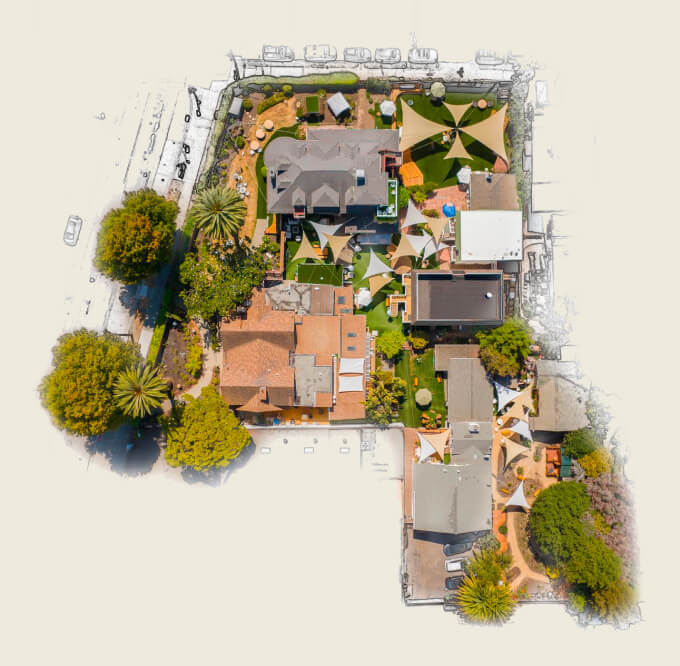
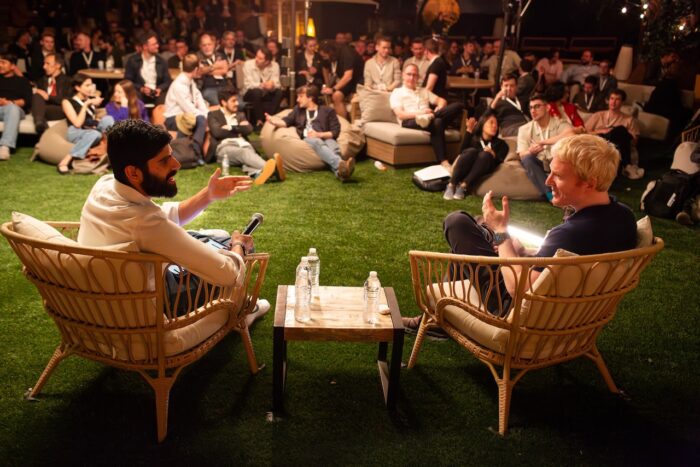
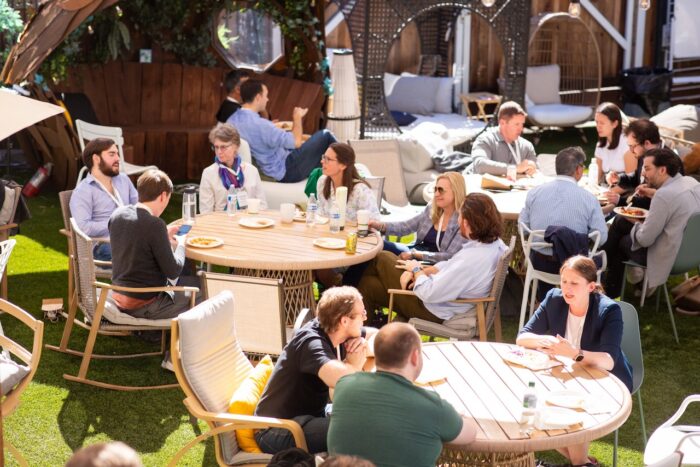
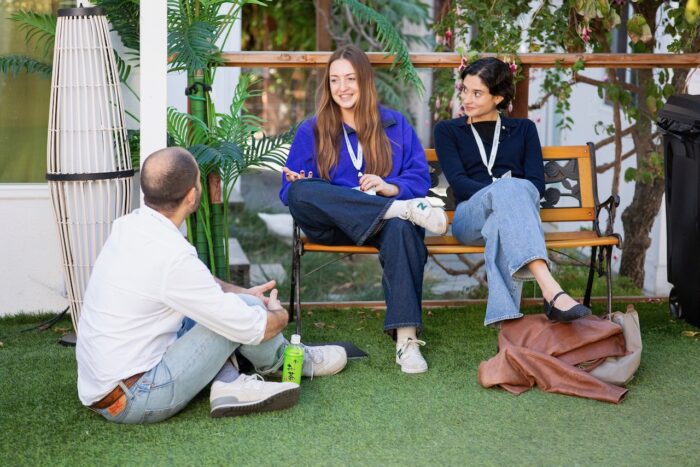
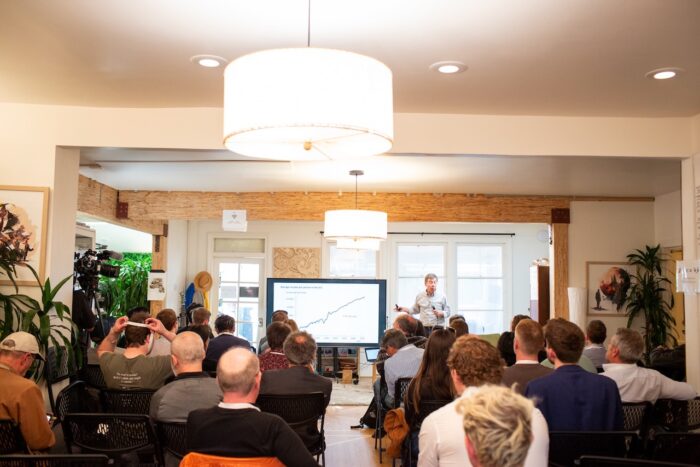
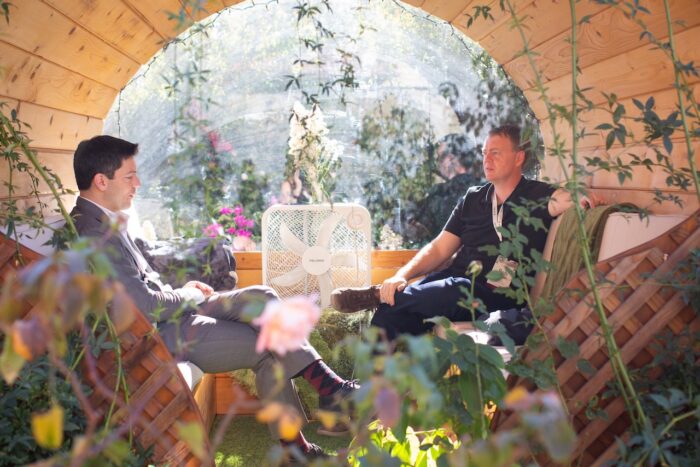
This gathering is all about connecting interesting people so ideas can flow and new projects can be cooked up. Our venue, the Lighthaven campus in Berkeley, was perfect for this last year and so we're glad to be back. It’s a cluster of old homes with a wide range of lounge areas that invite conversation, several living-room and larger areas to hold sessions of up to 100 people, and a garden with many places to sit and chat or walk around. Plenary sessions will happen in the garden auditorium, or be held in a large session space & livestreamed to smaller spaces.

2026 VIP & Speaker reception
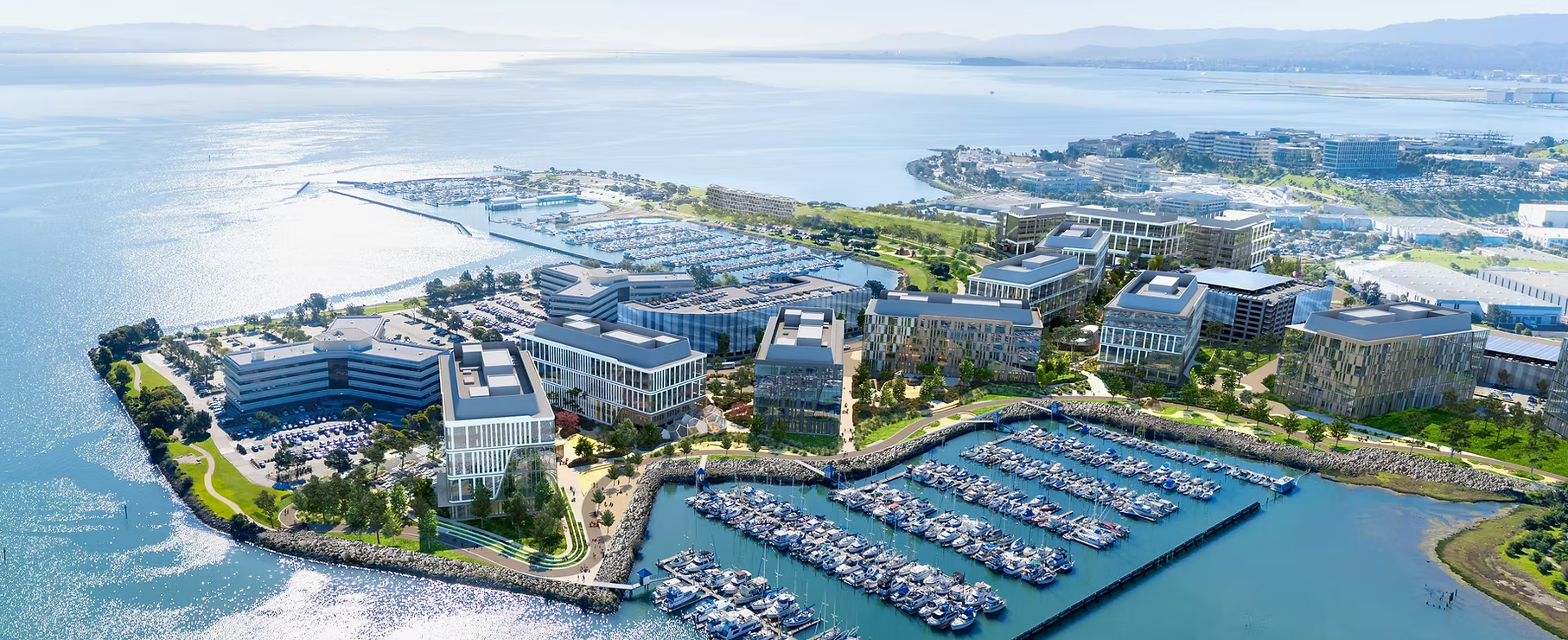
Stripe HQ, Oyster Point

Sponsored by Works in Progress, our invitation-only pre-event reception on Thursday evening for speakers and sponsors is again in South San Francisco at Stripe. This venue offers beautiful views of the bay and the city as we mingle over appetizers and explore progress ideas over dinner.
The program 
Four days of intellectual exploration, inspiration & interaction

We aim to make this event a highlight of your year.

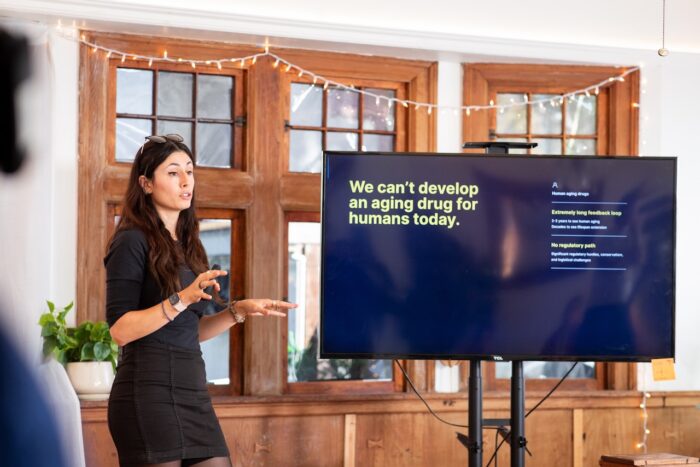
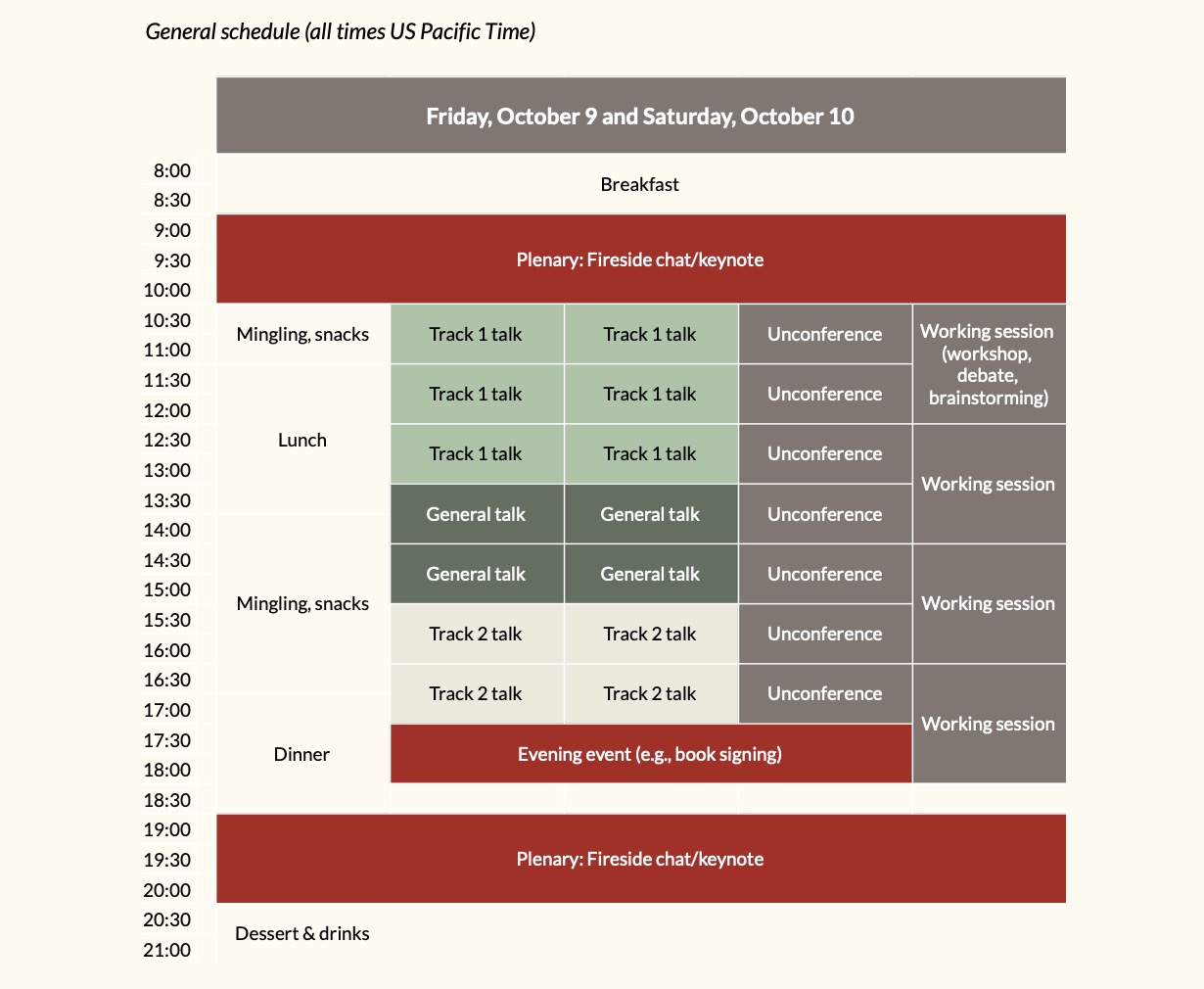
Attend talks on topics from tech to policy to culture, build relationships with new people as you hang out on cozy sofas or enjoy the sun in the garden, sign up to run an unconference session and find others who share your interests and passions, or pitch your ideas to those who could help make your dreams a reality.

Friday & Saturday

The main event

Optional add on days

Thursday & Sunday

Two extra days for interest-specific events—some open to all, some focused on specific groups. More details to be shared with attendees over the summer. 

  • Factory tours at Bay Area deep tech companies
  • Sessions on specific sub-topics, last year included far-future meta-science and funding, housing abundance policy, and bringing progress studies to universities
  • Unconference time and space for 1:1 meetings at Lighthaven
  • Demos; last year included a balloon launch of a stratospheric aerosol injection
  • Lightning talks including from the 2026 Roots of Progress blog-building fellows
  • An invitation-only pitch session for progress-focused not-for-profit initiatives
  • Welcome dinner on Thursday evening

Open sessions are included in your ticket, and you may also just hang out and mingle at Lighthaven on either day. 

Buy your ticket now or apply to attend!

  • If you have received an invitation, check your email for the link to purchase a ticket. Invitation doesn't guarantee a ticket as we expect to sell out. 

  • Not on our invitation list (yet)? We have an open application. Share just your contact info / company / website, or provide as much info as you think we’ll need to decide whether to invite you. Application deadline is May 31st; decisions will be made and shared by July 3rd. 

Scholarship tickets and financial support

We want every qualified person to be able to attend, so we’re keeping costs low. Regular tickets are $700, and cover food and beverage costs during the two core days (seven meals, snacks, and drinks). Participants are responsible for their own travel and lodging; limited scholarships and reduced ticket fees are available. 

If you’re applying to attend via the open application, we’ll ask about financial need there. 

If you received an invitation to attend and need financial support, email us and let us know: (1) what level of support you need (reduced cost ticket, travel stipend, lodging support), (2) why we should support you, and (3) whether you’re willing to volunteer at the conference.

Questions? Email us: progress-conference@rootsofprogress.org

Recommended event hotels

We have reserved courtesy blocks of rooms at a handful of nearby hotels. Each hotel has a different rate and way to book; please see details below. 

Most availability:

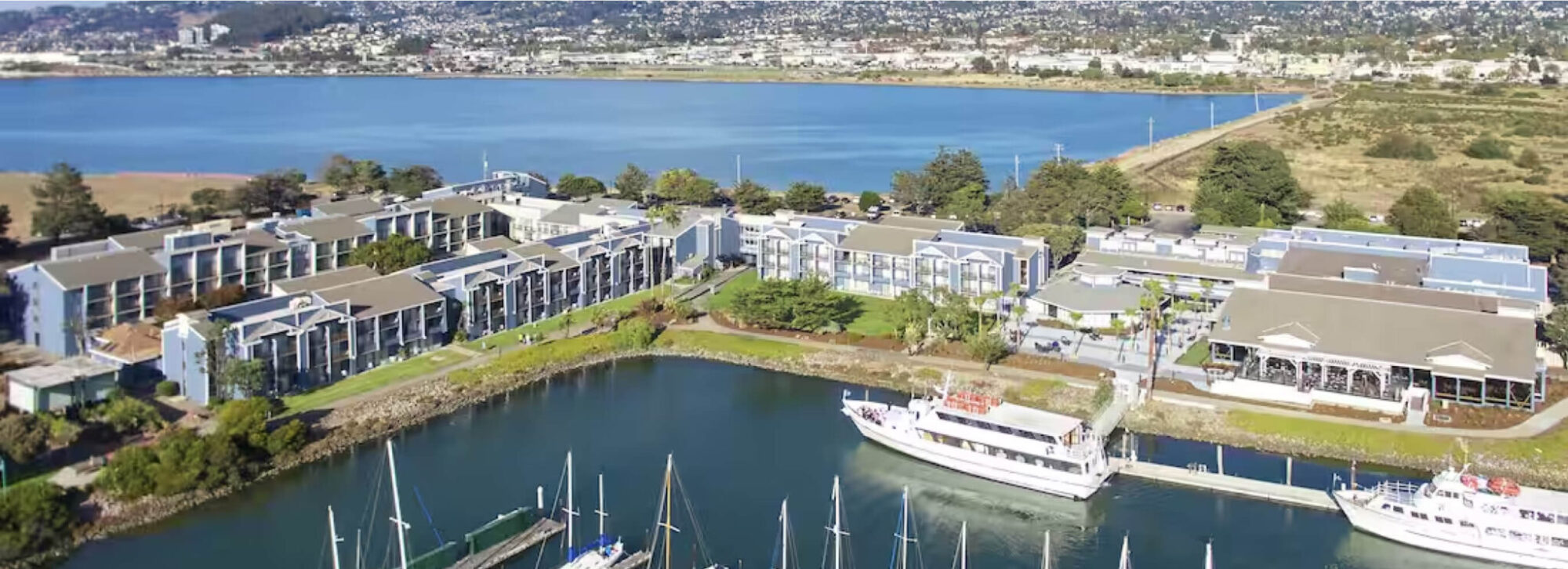
Doubletree by Hilton at the Berkeley Marina

A block of rooms is available at the Hilton DoubleTree at the Berkeley Marina. 15 minutes by Uber/Lyft or 40 min by bus from the venue and right on the Bay, this hotel is both convenient and nice.

Reserve your room while our special rate of $189 per room, per night is available. The rate is available for any nights from October 8th through October 11th. 

Book as soon as possible; only a limited number of rooms are available at this rate and they sold out last year. Cut-off when rooms sell out or September 17th at the latest. To book, use this reservation link or enter group code "CDT938".

Four Points by Sheraton Bay Bridge

We have a large block of rooms held at the Four Points. This hotel is also 15 minutes by Uber/Lyft or 40 min by bus from the venue and right on the Bay, this hotel is both convenient and nice.

Reserve your room while our group rate of $219 per night is available, valid on any nights from October 8th through October 11th. 

Book using this group link to get the discount. You can also call (888)-627-8078 to book and mention "Progress Conference". Last day to book with the group rate is Friday, September 11th. 

Hotel Shattuck Plaza Berkeley

Walk to the venue! This hotel is near UC Berkeley campus and just over a mile walk to Lighthaven, or a 20min bus ride. 

Reserve your room while the group rate of $319/night is available. 

Book using this reservation link to get the group rate. Last day to book with this rate is September 9th. 


Other good options: 

Sens Hotel Berkeley

Located close to the venue, SenS hotel is 10 minute drive or a 40 minute walk from Lighthaven. Newly renovated, this charming local hotel is centrally-located in one of the best walking neighborhoods around. This hotel is cozy and convenient. 

Discount available on your first night (Thursday, October 8th). Book as soon as possible, as this hotel is small there are only a handful of rooms available at this rate. First night discount available until September 16th.

To book, call the hotel directly at (510) 548-9930 and mention the group name "Progress Conference" to get the discount. 

AC Residence Inn Downtown Oakland

Located in Downtown Oakland, this hotel is a 10-15 minute drive or 30 minutes by bus to Lighthaven. 

Special group rate of $149 per night. 

To book, use this special booking link. Cut-off when rooms sell out or September 11th at the latest. 

Hilton Garden Inn Walnut Greek

Save by staying further away. 

This hotel is brand new! And located a few blocks from the Walnut Creek BART Station. This is a great value option if you're willing to stay outside of Berkeley. It's only 5 stops (1 transfer) to the Ashby station, which is then less than one mile from Lighthaven. Expect ~1hr trip each way by public transit, or 25min by car. 

Our rate is $175 per night, available for any nights from October 8th through October 11th. 

To book, use this group reservation link. Discount available until rooms sell out or September 8th at the latest.

Marriott Walnut Creek

Save by staying further away!

This hotel is also located near the Walnut Creek BART station. This is a great value option if you're willing to stay outside of Berkeley. It's only 5 stops (1 transfer) to the Ashby station, which is then less than one mile from Lighthaven. Expect ~1hr trip each way by public transit, or 25min by car. 

We don't have a block of rooms reserved but you can use this link for a 10–15% discount, subject to availability, booked before October 1st. 


We recommend booking accommodations early. Due to other regional events the same weekend, some hotels in the area are already sold out. 
FAQs

How do I get to Lighthaven?

Once you purchase your ticket, you'll be able to see the exact address on the Luma registration page & we'll email it to you. Lighthaven is just south of downtown Berkeley/UC Berkeley. 

There is no parking on site, and parking in the neighborhood streets is limited. We recommend either Ride Share services or taking public transport: Ashby BART is 0.9 miles from Lighthaven and Downtown Berkeley BART 1.2 miles, a nice walk past UC Berkeley and through residential neighborhoods.

If you drive, you can park at the Telegraph Channing Parking Garage (15 min walk from campus). 

What is the dress code?

The dress code is nice casual. Make sure to bring layers: some of the events, including keynotes and fireside chats, will be in the outdoor auditorium, weather permitting. Plus, we’ll be hanging out in the nice outdoor spaces late on Friday night. Bring fleece or down layers to stay comfy as you chat!

Can I bring my kids?

Yes! Kids under 12 years old are welcome if accompanied by a parent at all times (except during childcare).

We plan to have on-site childcare available on Friday and Saturday, with some modest cost-sharing. 

New for 2026: we hope to expand childcare to include progress-themed programming and curriculum.

If/when your kids are with you, we expect you will please ensure they aren’t disruptive to any sessions; if they become unhappy, please take them outside immediately as any noises will negatively impact the session recordings.  

Is there wifi at the venue?

Yes: Lighthaven offers a strong wifi throughout the venue, indoors and outside. There are also extension cords galore, so you can recharge your devices.

What options are there to lower cost? Can you help me find a roommate? 

We don't want cost preventing people from attending the event. If you need financial support, please complete the open application here. There's a section that asks for what kind of financial support you need, and a "what else?" question where you can provide additional info to help us decide on the level of support we can provide. 

Later this summer, we'll invite all registered attendees to private Slack channels, including one on travel & logistics, where you can post to find roommates.

What are your terms & conditions or code of conduct?

Yes, we have some basic terms and conditions, which include general waivers, photo and video policies, and code of conduct around sharing what you learn at the event. You'll need to agree to these terms and conditions when you register for the event. 

How do I find out who else is attending?

We’ll put together an attendee directory this summer. You’ll receive a link to a survey, where you can share your interests, goals for the conference, topics you’d like to discuss, etc. We’ll pull all that together into a searchable database to help you discover people you want to make sure you meet at the conference.

How can I connect with other attendees?

Join the Progress Studies Slack! We’re setting up dedicated channels for the conference, so people can chat with each other and we can share quick updates with everyone.

What is your cancellation policy?

Tickets are non-refundable; the ticket price only covers a part of the cost of putting on this conference. If you must cancel and would like your money back, rather than donating it to our organization and supporting the conference, email us at progress-conference@rootsofprogress.org

Are day passes available? 

Nope, all tickets get you access the whole event. There is not a separate ticket for just Friday and Saturday, for example. The ticket price only covers a part of the cost of putting on the conference, even considering only the two main days.