

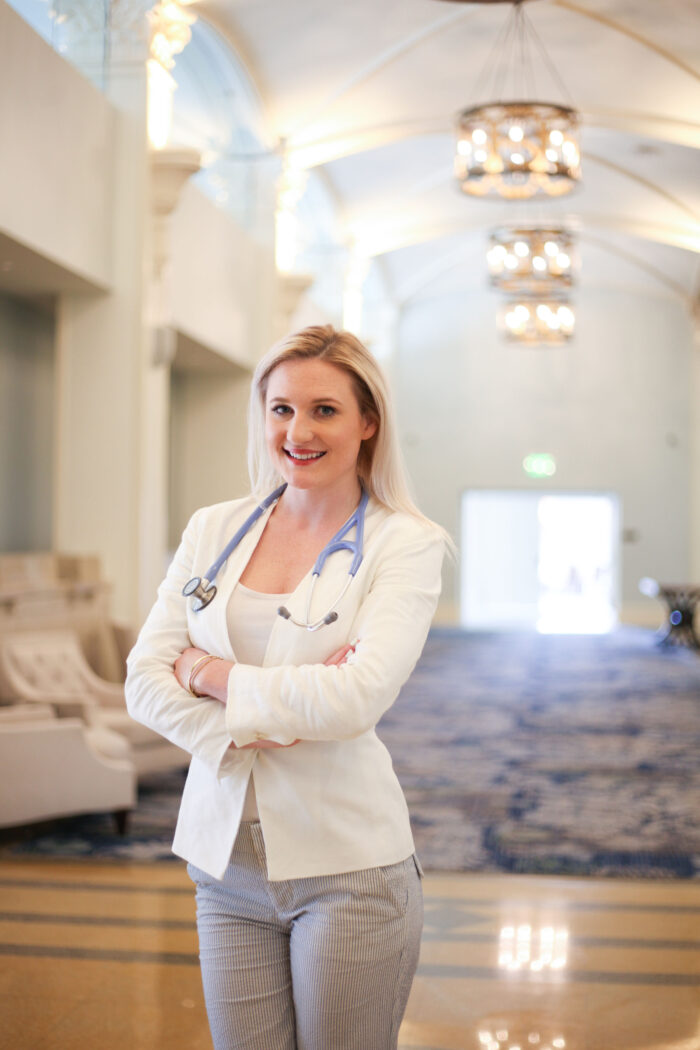
My Mission
Having time with patients to sustain good health, not just treat disease
I work for a direct primary care practice so I can spend time with my patients to help them sustain health, not just treat specific diseases.
Instead of accepting insurance payments tied to specific diagnostic codes defined by insurance or government programs like Medicare or Medicaid, we run on a membership program. My patients pay $90 per month (or a bit more for specialized services) and can see my colleagues and me as often as they want.
Direct primary care aligns my incentive with my patient’s health. In a traditional practice, doctors get paid by insurance for disease codes. Sick patients mean more disease codes and more money. In my practice, I can take time in my first meetings with a patient to discuss nutrition, exercise, sleep. If I succeed in getting them healthy, they won’t be back to see me as often—and I still get paid via the monthly membership fee. Our goals—a healthy person—are aligned.
I hope we’ll develop more innovative care models that allow us to shift from treating sickness to emphasizing prevention and health.

My Path
From Type 1 teen diabetes patient to life-style focused doctor
When I was 13 years old, I was diagnosed with Type 1 Diabetes. I felt scarred, broken, different, unsure whether I’d be able to live a normal life with this incurable auto-immune disease. I had so many questions—how do I feel better today? How can I use nutrition to control my blood sugar? How about exercise? Yet my doctors, who were supposed to be the experts, rarely answered those questions. Instead, they focused on treating my diabetes with drugs.
After high school, I didn’t know what career I wanted to pursue—but I knew I wanted to learn more about how nutrition impacts health, so I got my B.S. in nutritional science. During my studies, I realized that the people who really can impact how we manage disease were doctors. But could someone with T1D even become a doctor?
I gave it a shot and chose to apply to D.O. schools to become a doctor of osteopathic medicine. This is a type of medical school that teaches regular medicine and focuses more on a whole body approach to care. Still, I learned more about drugs and surgery and less about nutrition and lifestyle than I had hoped. When I graduated, I realized that the typical 12-minute doctor visit that insurance pays for isn’t suited for the type of care I wanted to provide.
Today, I work as a functional medicine doctor in a direct primary care practice, and I also provide patient education via online courses and my YouTube channel. Looking back, I feel that I got lucky that as a teen T1D patient I ran into the problem I wanted to work on early—and that I can now help other young people be less scared and confused, and feel more empowered to proactively manage their chronic diseases.