

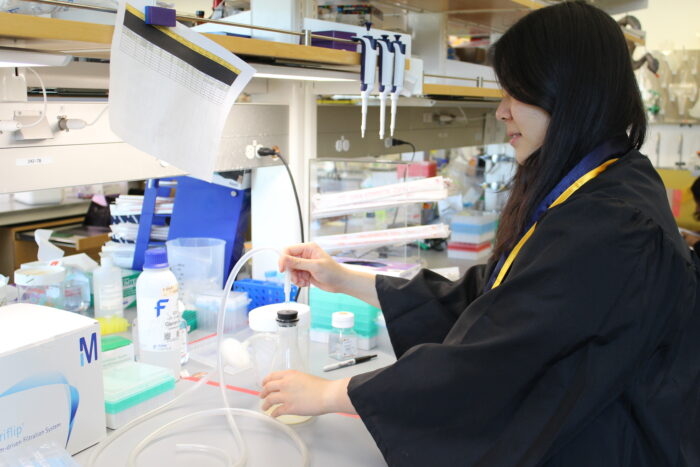
My mission
Studying how the body repairs itself—and how we might improve those natural tools
Every day, your body is quietly fixing itself. When you sleep, your brain clears out waste products and stabilizes memories. When you get sick, your immune system works to push you back toward balance. Evolution has spent millions of years refining these processes. As we age, these processes get less effective.
What if we can treat nature/evolution as our teacher? If we want to extend our health span, we have to understand the machinery that evolution built. Once we uncover the natural repair and resilience mechanisms we already have, we might find ways to augment or mimic them.
Could we tap into built-in healing pathways without needing eight hours of sleep? Can we boost DNA repair? What can we learn from organisms with unusual resilience, like naked mole rats? My long-term goal is to map the mechanisms that help us resist stress and remain healthy for longer, then explore how to amplify them.
My path
A fascination with science and a love of family
I was academically ambitious growing up, but I didn’t love math or physics as much as biology and chemistry. That’s why my earliest work in undergrad explored the neural circuits that control hunger and obesity—questions that felt personal, since Type II diabetes affects many people in my family. For the same reason, I spent my first year of college as a kidney-transplant scribe. That experience showed me the full arc of patient care. Unlike a short clinical encounter, transplant medicine is longitudinal; you follow patients for years.
In college, I also discovered weight lifting and became even more interested in the biology of aging, resilience, and how people—my family included—might thrive for longer. Then I joined a CRISPR lab and realized how powerful basic research could be. I got to work under the team of researchers led by Jennifer Doudna, who won the Nobel Prize in chemistry and was featured in The Code Breaker.
This was when I began to think seriously about becoming a physician-scientist. Clinical trials felt too downstream; basic science without a path to impact felt too detached. I wanted to be at the intersection—asking fundamental questions that might meaningfully change how we treat disease.
Today, I work with mouse models, exploring how gene-editing tools can help us understand mechanisms of human disease.