My Mission
Building learners for a world that never stops changing
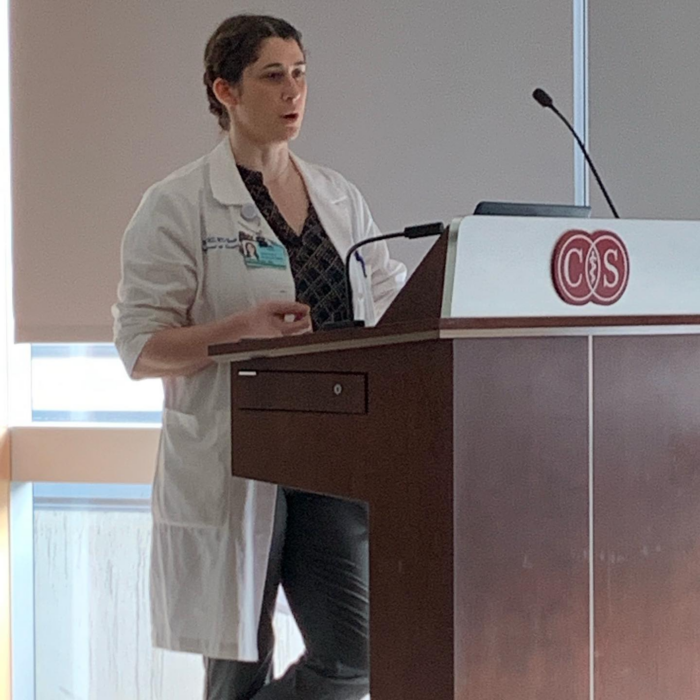
Practicing medicine taught me two competing truths: first, that knowledge is always incomplete and evolving; and second, that decisions need to be made anyway. Scientific progress lives in that tension: the need to act decisively, often with life-and-death consequences, while remaining instantly willing to revise those actions in the light of new evidence. When I study the great physicians and scientists of the past, this is the defining trait that emerges. They were bold enough to act, and brave enough to change course.
My mission today is to build educational systems that train this kind of thinker. The person who can apply their knowledge in the real world. Who appreciates the limits of their understanding, and the potential for error, without being paralyzed by those limits. Who understands where knowledge comes from, with both the cost it carries and the impact it can have. These are the people who will not simply use what is already known, but who will build what comes next.
Today, we live in an era of near-constant medical and technological miracles, and too often we take them for granted. My mission is to teach the human story behind scientific progress: the lives saved, the lives risked, and the minds that made it possible. Because when we see ourselves as part of the long human story of discovery, we also see ourselves as capable of writing the next chapter.
My Path
Surgeon turned educator
When I was 16, I started working as a docent at the Franklin Institute Science Museum in Philadelphia. I led school groups through the exhibits, watching solar flares on the giant telescope or tracing the path of the blood through the giant walk-through heart. I loved the moment of realization when someone understood something new. When something they learned in a textbook became real.
I had always loved science, and I liked working with people. Medicine felt like a natural path. I completed my undergraduate education at the University of Chicago, and went to Emory for my MD. I fell in love with surgery: the intensity, the precision, the extreme focus and order of the operating room. I completed my surgical residency at Stanford, where I remained deeply interested in education. During residency, I completed a two-year Surgical Education Fellowship and earned a Master’s in Education. Becoming an expert surgeon was something that felt incredibly important, and incredibly hard. I wanted to understand the process by which a student became a master; an intern became an expert.
During my fellowship in Minimally Invasive Surgery at Cedars-Sinai, I became acutely aware of how much patient care depends not just on scientific knowledge, but on how that knowledge is transmitted. I watched excellent surgeons trained in different systems make different decisions with the same evidence. At the same time, I worked closely with top medical students and residents—brilliant test-takers who struggled to apply information they had memorized to the messy reality of real patients. I became fascinated with what their earlier education had given them—and what it hadn’t.
I joined the University of Michigan faculty as a professor with a busy clinical practice and an active role in surgical education research. I became more and more fascinated with how people learn, how confidence and fear shape performance, how new information can be integrated into an existing understanding. I began working with close friends and educational innovators who were building a network of Montessori schools. I wanted to understand more deeply the nature of early education: what we, in medicine, could learn from the educational experts. I began to deeply study Montessori- first through the lens of surgical skills training, and then with an interest in early childhood education itself. Eventually, I made the choice to focus full-time on education.
I spent four years helping build a Montessori-inspired K–12 program, training Montessori teachers, building curriculum, and thinking intensely about what kind of learners we actually want to send into the world. From there, I transitioned into work with the Alpha school network, where I’m building Montessorium- a new type of Montessori elementary program that combines cutting-edge technology with time-tested pedagogy.
Along the way, I began writing about medical history, telling the stories of discoveries and the people behind them- the moments of insight, the uncertainty, the courage. That writing became a way to bridge my two lives as a surgeon and an educator. Today, everything I build lives at the intersection of those worlds. I am still animated by the same question that fascinated me as a teenager working in a science museum: How do we help people truly understand the world around them- and their own power to change it?